Tank, tankless, gas & electric
Water Heater Repair in Lancaster, PA
A cold shower on a January morning gets everyone’s attention. Here’s what usually goes wrong with water heaters in Lancaster homes, what you can safely check yourself, and when it’s time for a new one.
What Water Heater Repair Involves
Water heater repair in Lancaster means finding why the heater isn’t making enough hot water, or why it’s leaking, and fixing that part: a thermocouple or igniter on a gas unit, a heating element or thermostat on an electric one, a broken dip tube, a dripping relief valve or a clogged drain valve. When the tank itself is rusted through, the fix is a new heater.
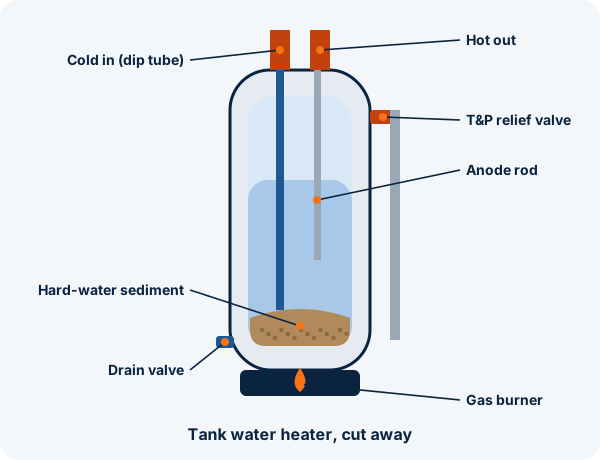
Most homes around Lancaster have a 40- or 50-gallon tank heater in the basement, running on natural gas from UGI or on electricity from PPL. Out in the county you’ll also see propane and oil-fired units, plus a growing number of tankless and heat-pump water heaters. Whatever the type, it works the same way: cold water enters through a dip tube that sends it to the bottom, a burner or elements heat it, and hot water leaves from the top. A sacrificial anode rod corrodes so the steel tank doesn’t, and a temperature and pressure (T&P) relief valve opens if things get dangerously hot. It’s one of the most common reasons people call a plumber in Lancaster, PA.
Why Lancaster’s Hard Water Wears Out Heaters
Hard water carries dissolved calcium and magnesium. Much of Lancaster County sits on limestone, so many homes, especially those on private wells, have hard water. When that water is heated, the minerals drop out and settle at the bottom of the tank as sediment. You can sometimes hear it: a popping or rumbling sound as steam bubbles push up through the layer of scale.
That sediment causes a chain of problems. It takes up space, so the tank holds less hot water. It insulates the water from the burner, so a gas heater runs longer and the bottom of the tank overheats, which shortens its life. On electric heaters the lower element gets buried in scale and burns out. And sediment clogs the drain valve so the tank can’t be flushed. That’s why plumbers here recommend flushing a tank once or twice a year and checking the anode rod every few years.
If you already have a softener, keep it serviced; softened water can eat anode rods faster, so ask the plumber to check the rod during a tune-up.
8 Signs Your Water Heater Needs Attention
- No hot water at all, often a pilot that went out, a failed igniter or thermocouple, or a tripped breaker or burned-out element.
- Hot water runs out fast, usually sediment or a broken dip tube mixing cold water into the hot.
- Rumbling, popping or crackling from the tank as it heats, a sign of heavy sediment.
- Rusty or brown hot water, which can mean the inside of the tank or the anode rod is badly corroded.
- A rotten-egg smell from hot taps only, bacteria reacting with the anode rod. A different rod type and a tank flush often fix it.
- Water pooling at the base. A leak from a fitting can be repaired; a leak from the tank body cannot.
- The relief valve drips or discharges, pointing to high pressure, too high a temperature setting, or a missing expansion tank.
- The heater is past 10 to 12 years old and showing any of the above.
What You Can Safely Check First
A few checks are safe for most homeowners and can save a service call:
- Gas heater: look through the small window near the bottom. If the pilot is out, follow the relighting steps printed on the label on the tank. If it won’t stay lit, the thermocouple or flame sensor is the likely culprit.
- Electric heater: check the breaker in the panel. If it tripped once, reset it; if it trips again, stop and call a plumber.
- Thermostat: make sure the dial wasn’t bumped down. Around 120°F is a good balance of comfort, efficiency and scald safety.
- Cold-water valve on top: make sure it’s fully open.
Gas valves and burners, the T&P relief valve, electrical work inside the heater, and anything involving the flue or venting. A poorly vented gas heater can push carbon monoxide into the house.
Repair or Replace Your Water Heater?
A good plumber will tell you honestly which way to go. Here’s the general rule they use:
| Situation | Usually |
|---|---|
| Under 8 years old, failed thermocouple, igniter, element or thermostat | Repair |
| Leaking from a fitting, valve or the drain valve | Repair |
| Sediment and noise, but heating fine | Flush and service |
| Leaking from the tank body or seams | Replace |
| 10 to 12+ years old and needing a costly part | Replace |
| Family has grown and hot water never lasts | Replace, possibly larger or tankless |
When a heater is replaced, the work typically includes draining and hauling away the old tank, setting the new one on a stand or pan, connecting water and gas or electric, checking the venting, installing or replacing the thermal expansion tank where the water system has a check valve or pressure regulator, piping the relief valve discharge to within a few inches of the floor, and pulling a municipal permit where one is required.
Tank, Tankless or Heat Pump?
| Type | Good for | Keep in mind |
|---|---|---|
| Standard gas tank | Most Lancaster basements with UGI gas; fast recovery | Needs proper venting; sediment buildup in hard water |
| Electric tank | Homes without gas; simple install | Slower recovery; elements scale up in hard water |
| Tankless (on-demand) | Endless hot water, saves space, long lifespan | Higher upfront cost; needs regular descaling with hard water; may need a bigger gas line |
| Heat-pump (hybrid) electric | Lower electric bills, can qualify for rebates | Needs room around it and cools the space it’s in |
| Indirect (off a boiler) | Older homes with hot-water heat | Depends on the boiler being in good shape |
In winter, groundwater around Lancaster comes in cold, so any heater has to work harder from December through March. If your current heater barely keeps up in February, that’s worth mentioning when you talk sizes. Related problems often show up at the same time, like a hidden leak or a slow basement floor drain, so mention anything else you’ve noticed.
Simple Water Heater Care for Lancaster Homes
Most water heaters die early from neglect, not bad luck. A few minutes a year goes a long way, especially with hard water. Once or twice a year, attach a hose to the drain valve near the bottom, run it to a floor drain or outside, and let a few gallons out until it runs clear. Lift the lever on the relief valve briefly to make sure it isn’t stuck, then let it snap shut. Keep boxes, paint cans and laundry at least a couple of feet away from a gas heater so it can breathe. And every three to five years, have a plumber pull and check the anode rod; replacing a worn rod is cheap compared to a new tank. If the drain valve leaks after you use it, or the relief valve keeps dripping, call for service before it gets worse.
FAQ
Water Heater Questions from Lancaster Homeowners
Why do I have no hot water but the pilot is on?
On a gas heater, the burner may not be lighting because of a faulty thermocouple, gas control valve or a clogged burner. On a newer model with electronic ignition, a failed igniter or flame sensor is common. A plumber can test each part safely.
How often should I flush my water heater in Lancaster?
With hard water, once or twice a year is a good habit. If you’ve never flushed an older tank, have a plumber do the first one, because the drain valve can clog or leak once disturbed.
What temperature should my water heater be set to?
About 120°F works for most households. It reduces scalding risk, saves energy and slows mineral buildup. Some households with dishwashers lacking a booster heater or with health concerns use a slightly higher setting with anti-scald valves.
Why does my hot water smell like rotten eggs?
Usually harmless bacteria in the tank react with a magnesium anode rod and produce hydrogen sulfide. It’s more common with well water. Replacing the anode with an aluminum-zinc or powered rod and flushing the tank usually solves it.
Is my water heater leaking dangerously?
A slow drip from a fitting isn’t an emergency, but water pooling from the bottom of the tank means it’s failing and can let go. Turn off the gas or power, close the cold-water valve on top, and call a plumber.
Do I need a permit to replace a water heater?
Many municipalities in Lancaster County require a permit for water heater replacement, especially for gas units. The installing plumber usually pulls it. Ask about it when you get the quote.
Is a tankless water heater worth it?
It can be if you want endless hot water, have limited space or plan to stay in the home a long time. In hard-water areas, a tankless unit needs regular descaling, and a gas model may need a larger gas line and new venting.
Talk to a local Lancaster plumber
No hot water? Talk to a Lancaster plumber.
One free call connects you with an independent plumbing company that repairs and replaces water heaters in Lancaster County.
(717) 750-0501